-
LLM Parameter Optimization: Stop Leaving Agent Performance on the Table
If you search for “LLM parameter optimization,” you’ll find guides on tuning learning rates, batch sizes, and layer configurations. But…
-
How to Evaluate RAG Systems: Metrics, Methods, and What to Measure First
When a RAG system fails, the output alone won’t tell you why. RAG stands for retrieval-augmented generation, and it’s one…
-
Retrieval-Augmented Generation: A Practical Guide to RAG Architecture, Retrieval, and Production-Ready Context
Large language models are impressive memorizers. During training, they compress vast amounts of text into billions of parameters, encoding patterns,…
-
Prompt Learning: Using Natural Language to Optimize LLM Systems
Your customers expect better and more consistent results than your AI agent can deliver. You manually tweak a prompt, test…
-
LLM-as-a-Judge: How to Build Reliable, Scalable Evaluation for LLM Apps and Agents
LLM-as-a-judge is an evaluation method for assessing the output quality of AI apps. Think of it as a mechanism that…
-
Optimizing AI IDEs at Scale
Using AI development tools at scale comes with real overhead for every engineer. It’s an additional cost layered on top…

-
Comet Recognized in 2026 Gartner® Market Guide for AI Evaluation and Observability Platforms
We are excited to announce that Comet has been included as a Representative Vendor in the Gartner Market Guide for…
-
Model Context Protocol: How AI Agents Connect to Your Data
The Model Context Protocol (MCP) emerged in late 2024 as the architectural solution for AI agent connectivity. In 2023, LLMs…

-
What is LLM Observability? The Ultimate Guide for AI Developers
If your LLM application or agent sends your user a hallucinated answer, do you know when and why it happened?…
-
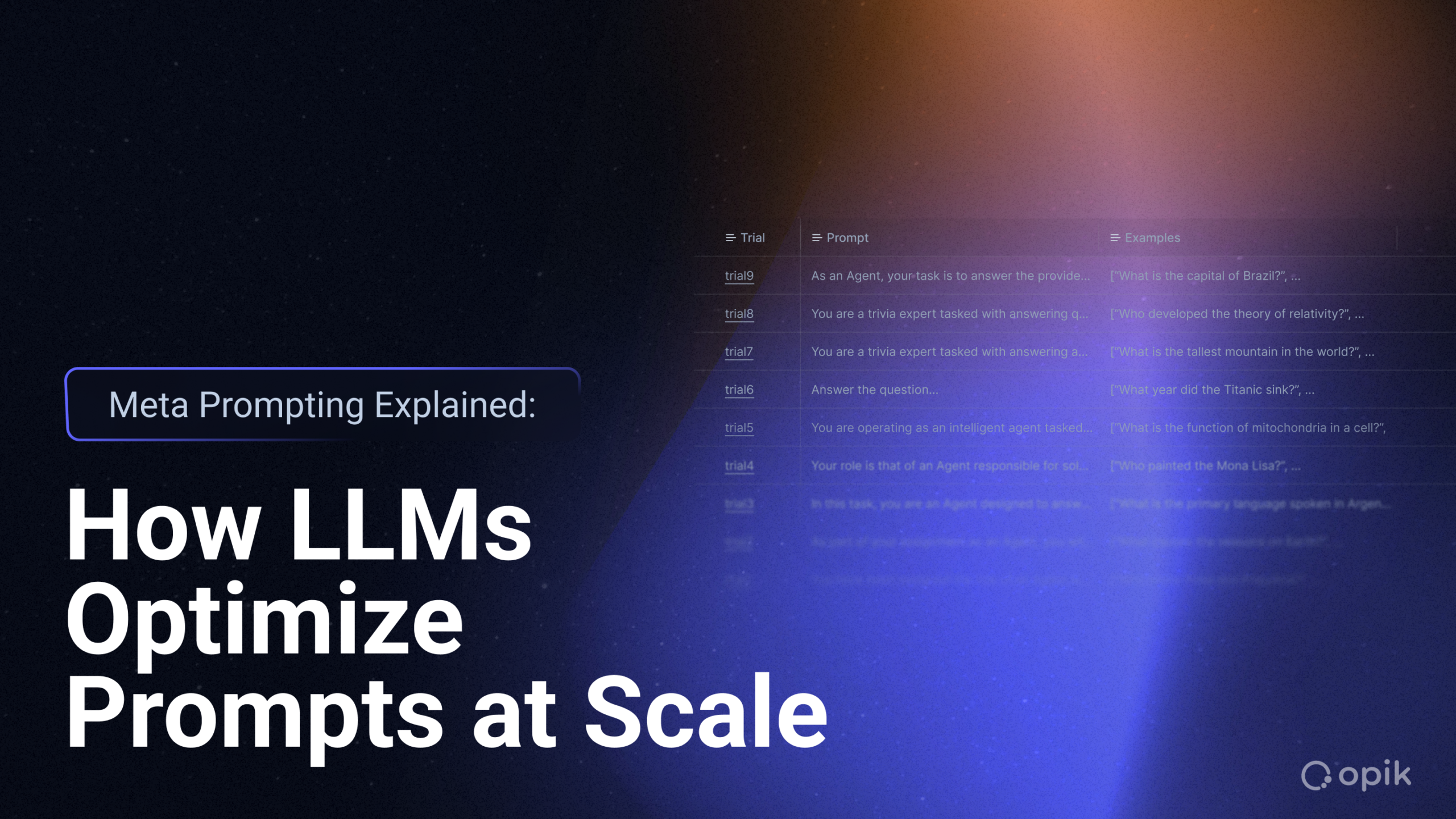
Meta Prompting: Use LLMs to Optimize Prompts for AI Apps & Agents
Meta prompting is a type of prompt engineering that zooms out from the specific content of a single prompt to…
New! Track & optimize Claude Code spend across your engineering team. Learn More→

Category: LLMOps





Get started today for free.
You don’t need a credit card to sign up, and your Comet account comes with a generous free tier you can actually use—for as long as you like.